Offline Robot Programming & 3D Simulation
Program and simulate complex arc-welding operations in a realistic 3D virtual environment without stopping the robot or interrupting production.
Program, simulate and optimize robotic welding operations offline with Almacam Robotics for Welding.
Designed specifically for welders, the software enables manufacturers and robotic integrators to program even complex arc-welding robots in a realistic 3D virtual environment—without stopping production.
Automatically create welding trajectories, manage welding parameters, calculate collision-free robot paths and validate complete robotic cell movements before transferring programs to production.
With intelligent program transfer, automatic trajectory recalibration and synchronized management of robots and positioners, manufacturers can significantly reduce programming time, improve robot utilization and make robotic welding more efficient for complex assemblies and small-series production.
Key features
Program and simulate complex arc-welding operations in a realistic 3D virtual environment without stopping the robot or interrupting production.
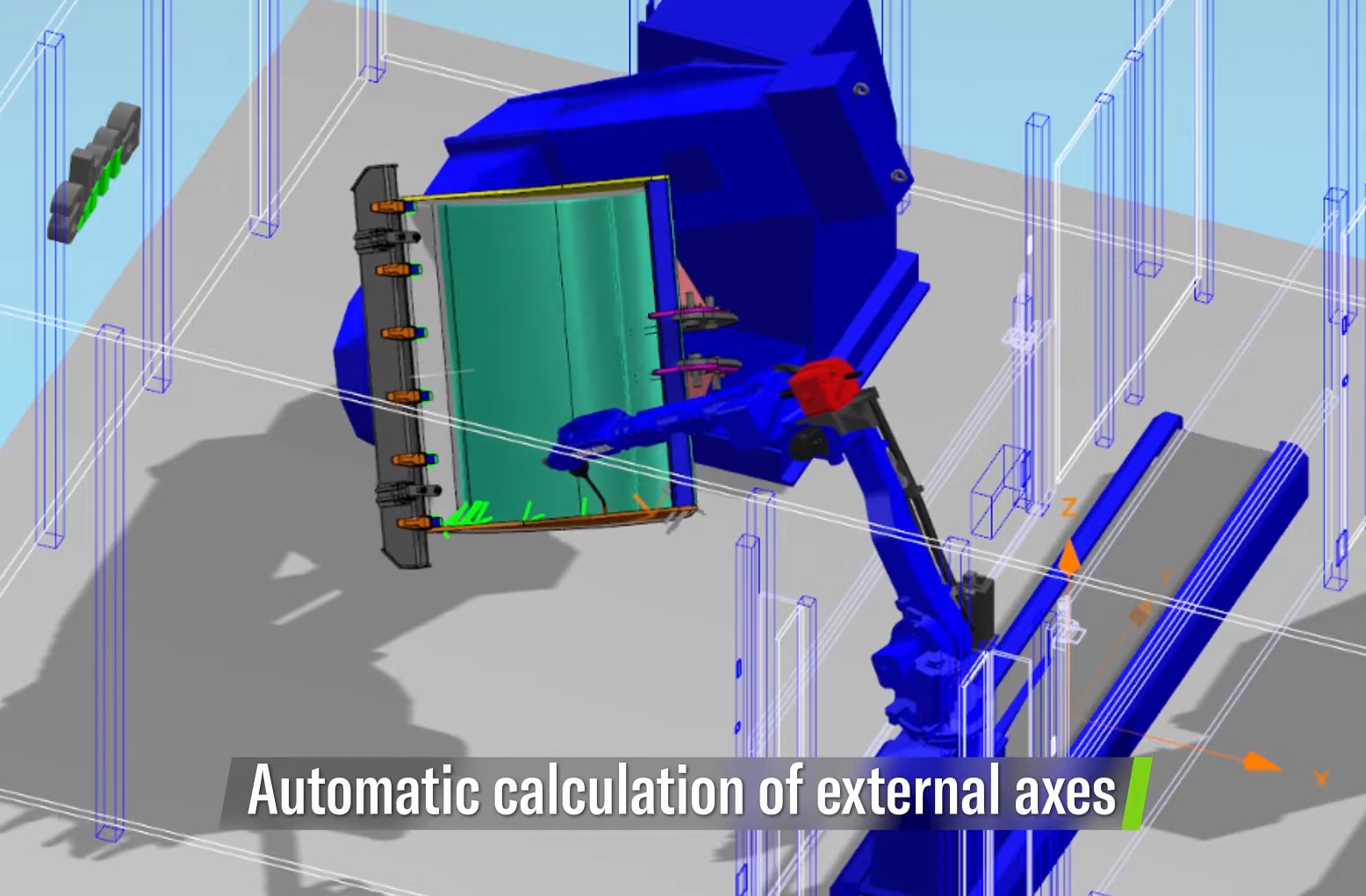
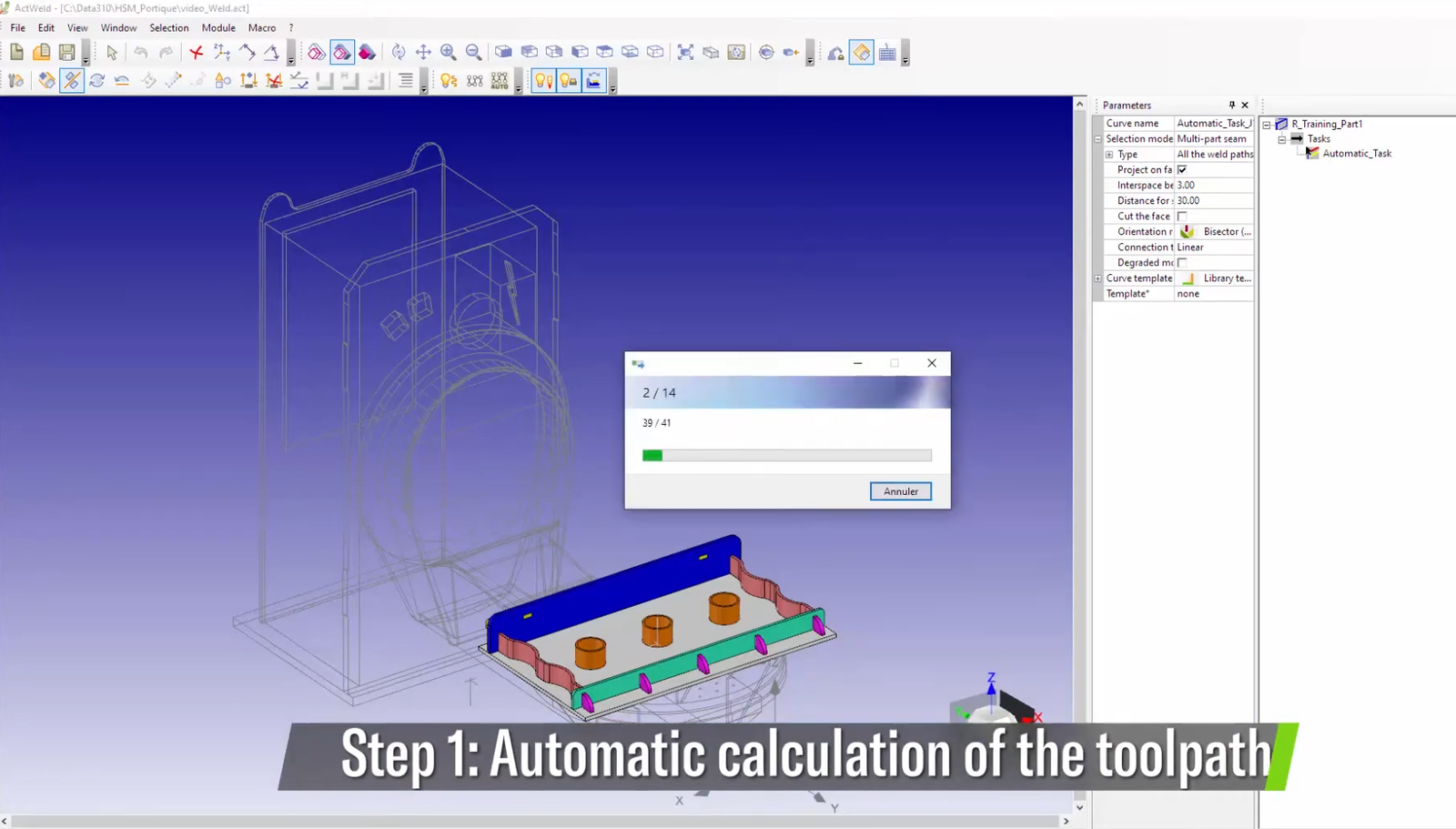
Automatically create welding trajectories and apply welding parameters to accelerate programming while maintaining consistent process requirements.
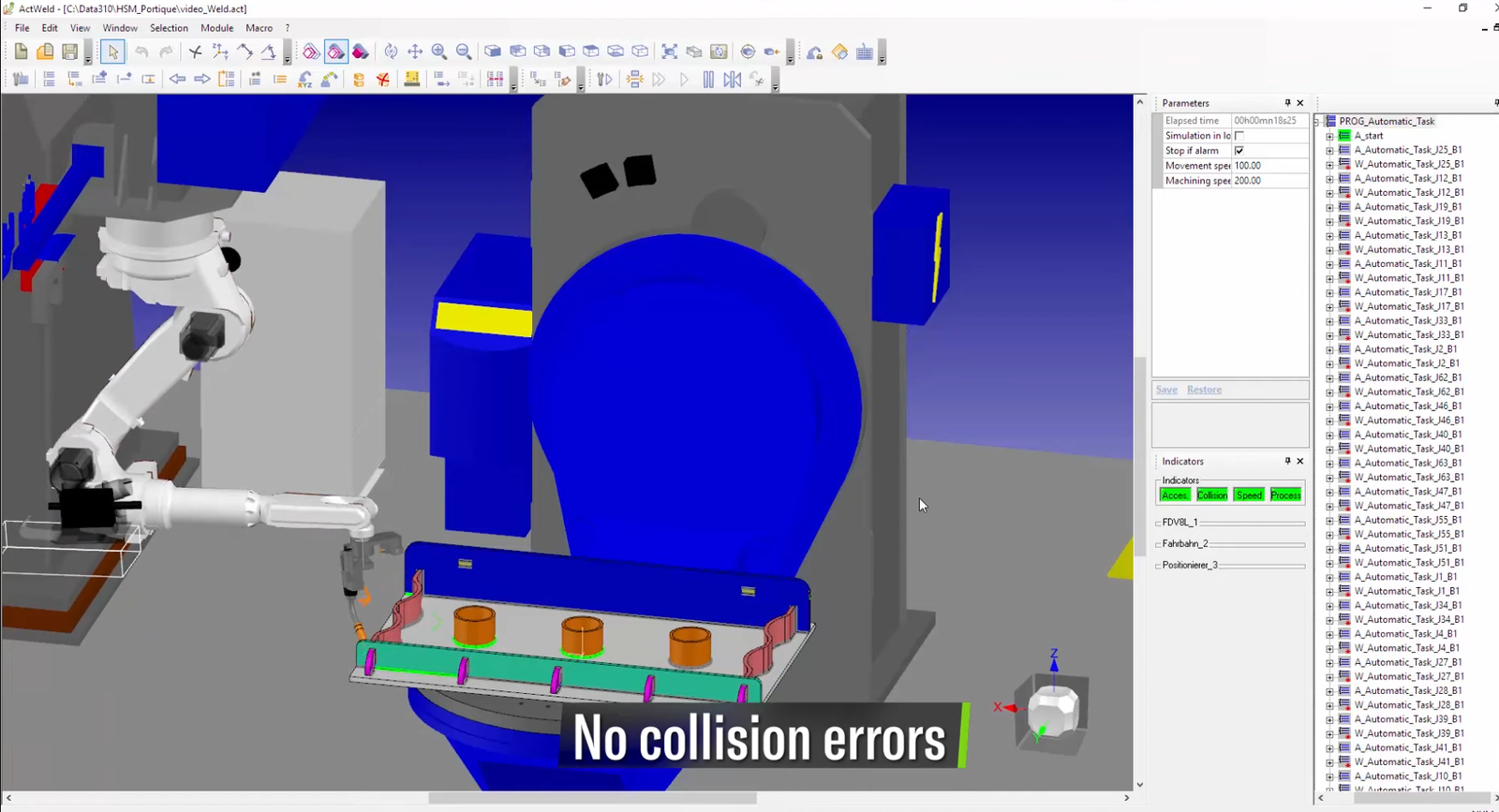
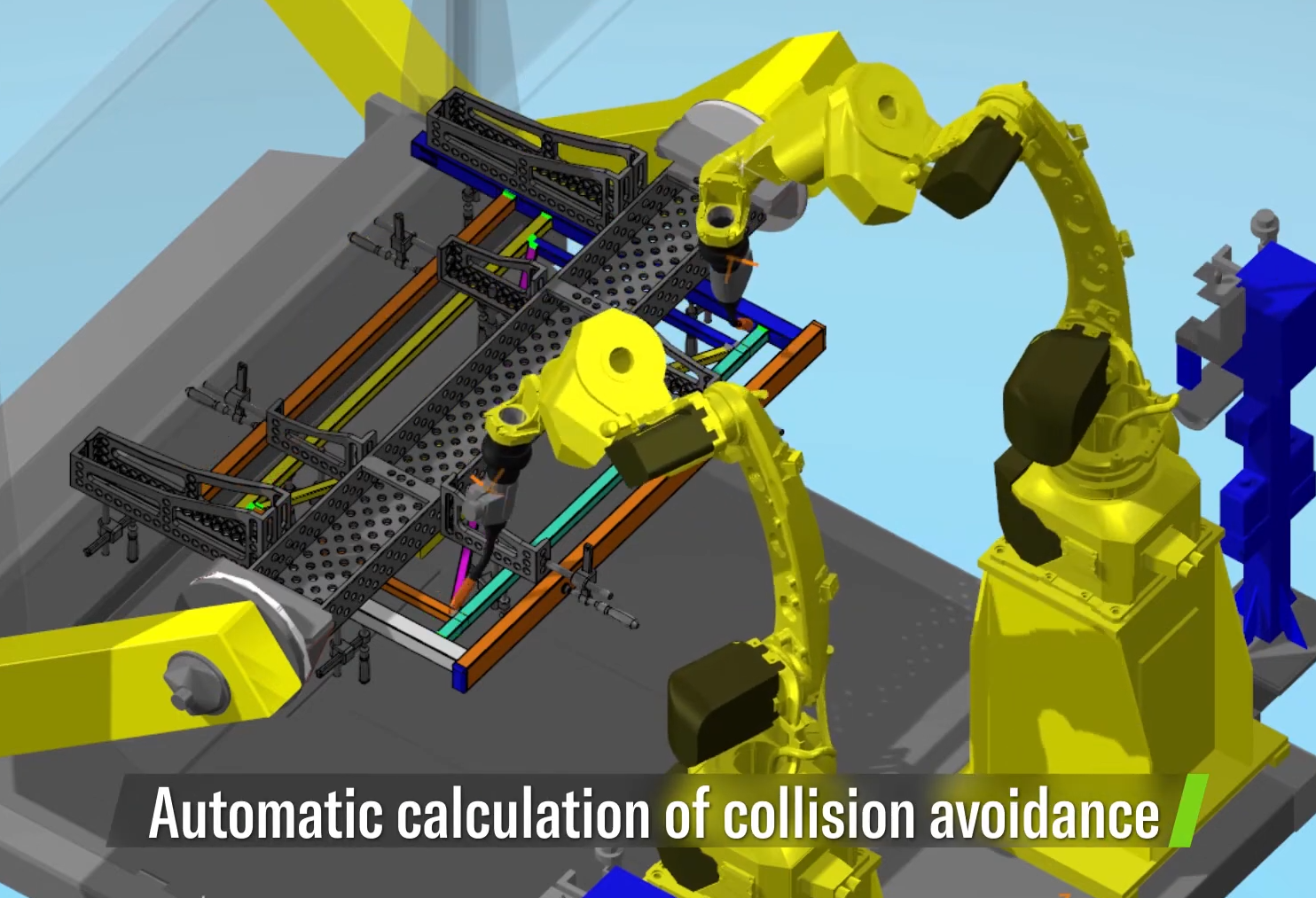
Automatically calculate robot movements and search for collision-free paths while considering the complete robotic cell environment.
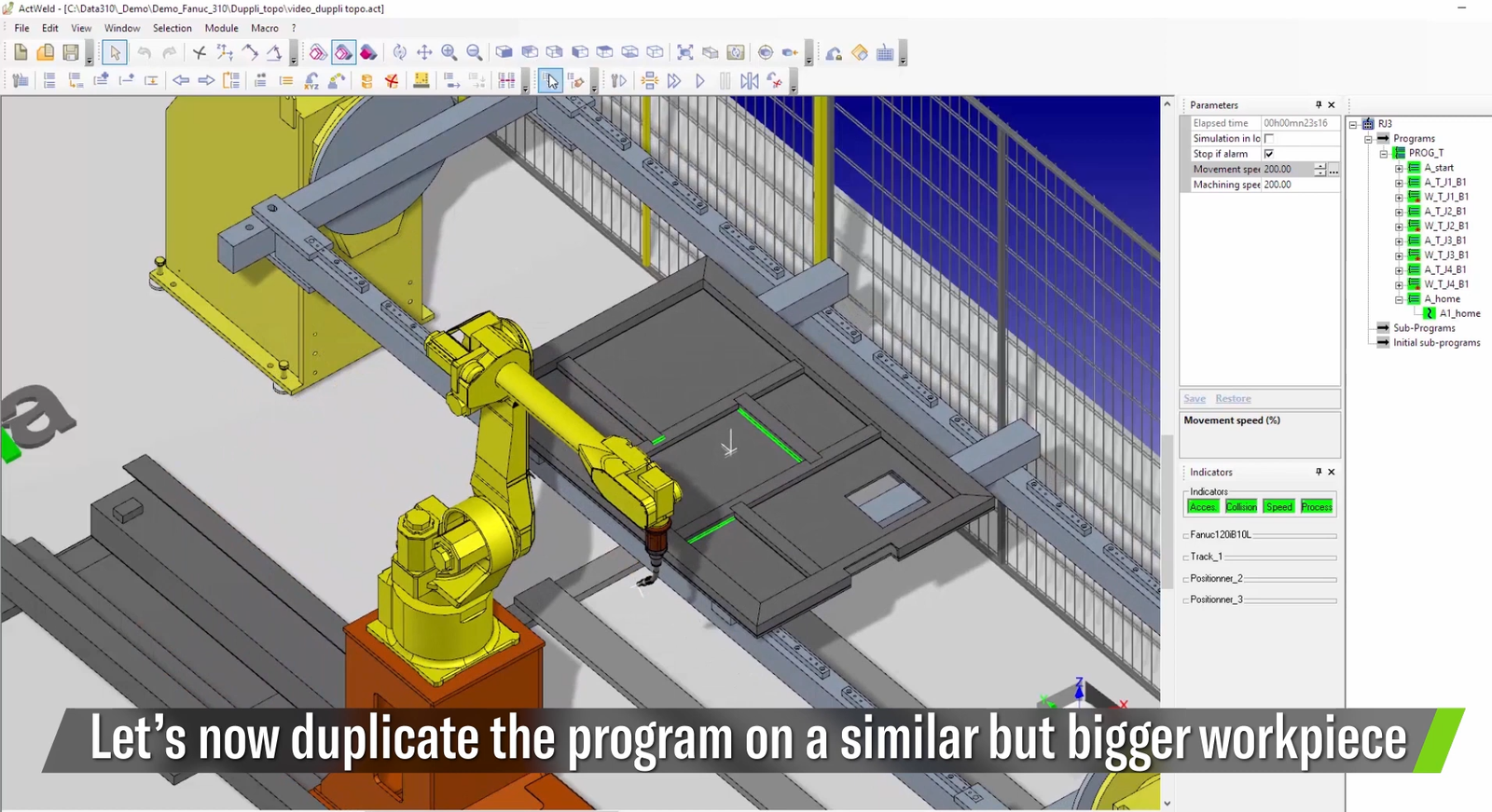
Reuse welding programs for identical or similar parts and automatically recalibrate trajectories using supported sensing technologies.
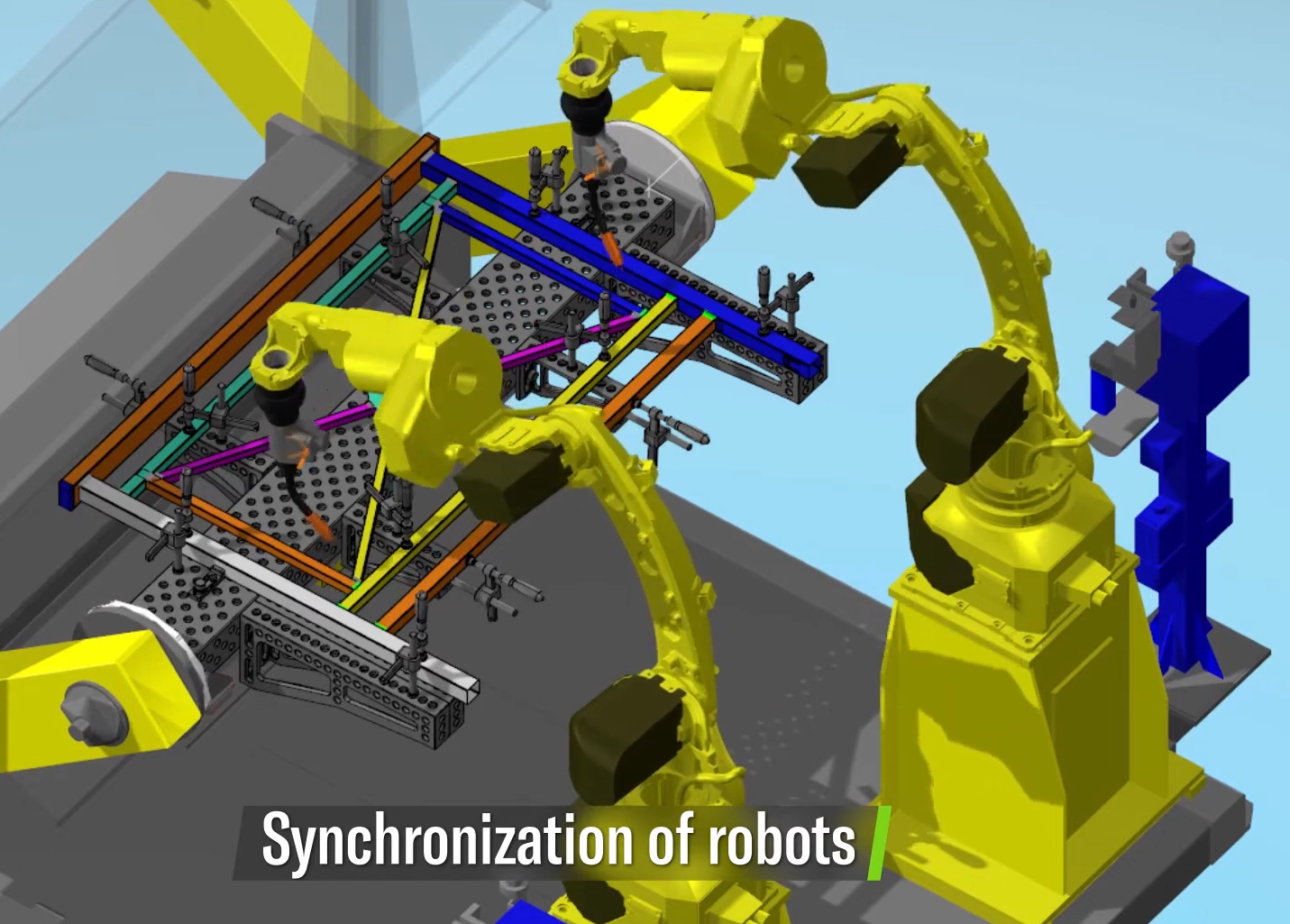
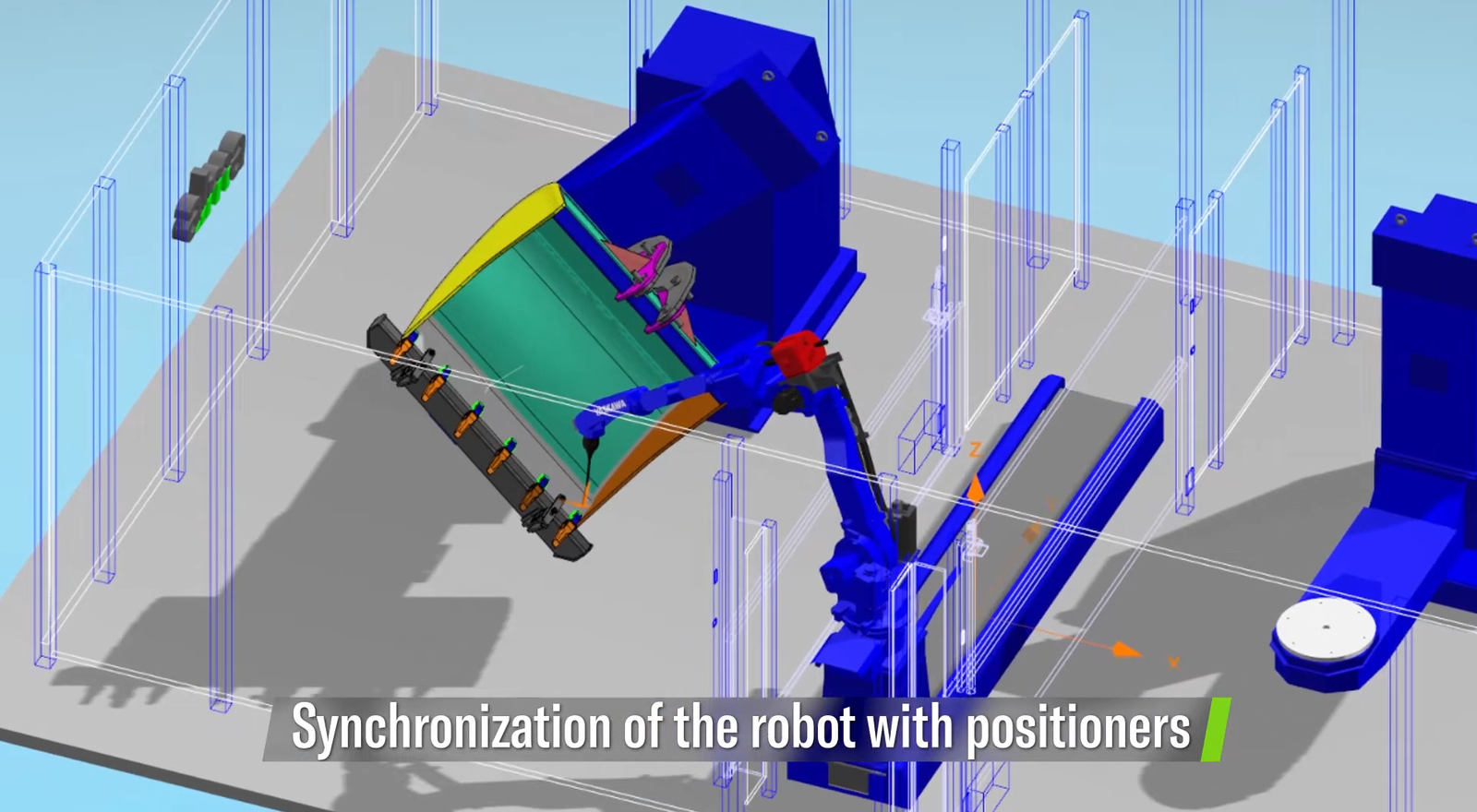
Synchronize robots, positioners and external axes to program and validate complex coordinated movements within the complete robotic welding cell.
Benefits
Use cases
Program changing parts and low-volume batches offline, making robotic welding more practical where frequent robot reprogramming is required.
Program difficult weld seams, restricted access areas and complex robot movements in a realistic 3D environment before production.
Program and synchronize welding robots with positioners, turntables, tracks and external axes for complex coordinated operations.
Reuse and adapt existing welding programs for identical or similar parts to significantly reduce programming time for product families.
Prepare and validate new robot programs offline while the physical welding cell remains in production, reducing programming-related downtime.
Simulate complete robotic welding cells, validate robot accessibility and detect potential collisions before programs are transferred to production.
Program changing parts and low-volume batches offline, making robotic welding more practical where frequent robot reprogramming is required.
Program difficult weld seams, restricted access areas and complex robot movements in a realistic 3D environment before production.
Program and synchronize welding robots with positioners, turntables, tracks and external axes for complex coordinated operations.
Reuse and adapt existing welding programs for identical or similar parts to significantly reduce programming time for product families.
Prepare and validate new robot programs offline while the physical welding cell remains in production, reducing programming-related downtime.
Simulate complete robotic welding cells, validate robot accessibility and detect potential collisions before programs are transferred to production.
Program changing parts and low-volume batches offline, making robotic welding more practical where frequent robot reprogramming is required.
Program difficult weld seams, restricted access areas and complex robot movements in a realistic 3D environment before production.
Program and synchronize welding robots with positioners, turntables, tracks and external axes for complex coordinated operations.
Reuse and adapt existing welding programs for identical or similar parts to significantly reduce programming time for product families.
Prepare and validate new robot programs offline while the physical welding cell remains in production, reducing programming-related downtime.
Simulate complete robotic welding cells, validate robot accessibility and detect potential collisions before programs are transferred to production.
Downloads
FAQ
Common Questions
Almacam Weld is an Offline Programming (OLP) solution for robotic arc welding. It enables manufacturers and robotic integrators to create, simulate, optimize and validate welding robot programs in a virtual 3D environment before transferring them to the physical robot.
Offline Programming allows welding robots to be programmed away from the physical robotic cell. Robot movements, welding trajectories and process parameters are prepared and simulated virtually, allowing the actual robot to remain available for production.
Traditional teach-pendant programming requires the physical robot to be stopped while an operator teaches movements point by point. With Almacam Weld, programming is performed offline from CAD data in a virtual robotic cell, significantly reducing setup time and production interruption.
We'll bring your machines, your parts, and your real numbers — and show you the difference.