CNC Programming Insights
CNC programming can become a hidden production bottleneck. Learn practical ways to reduce programming time, eliminate repetitive work, improve consistency, and move sheet metal jobs from CAD to the machine faster.
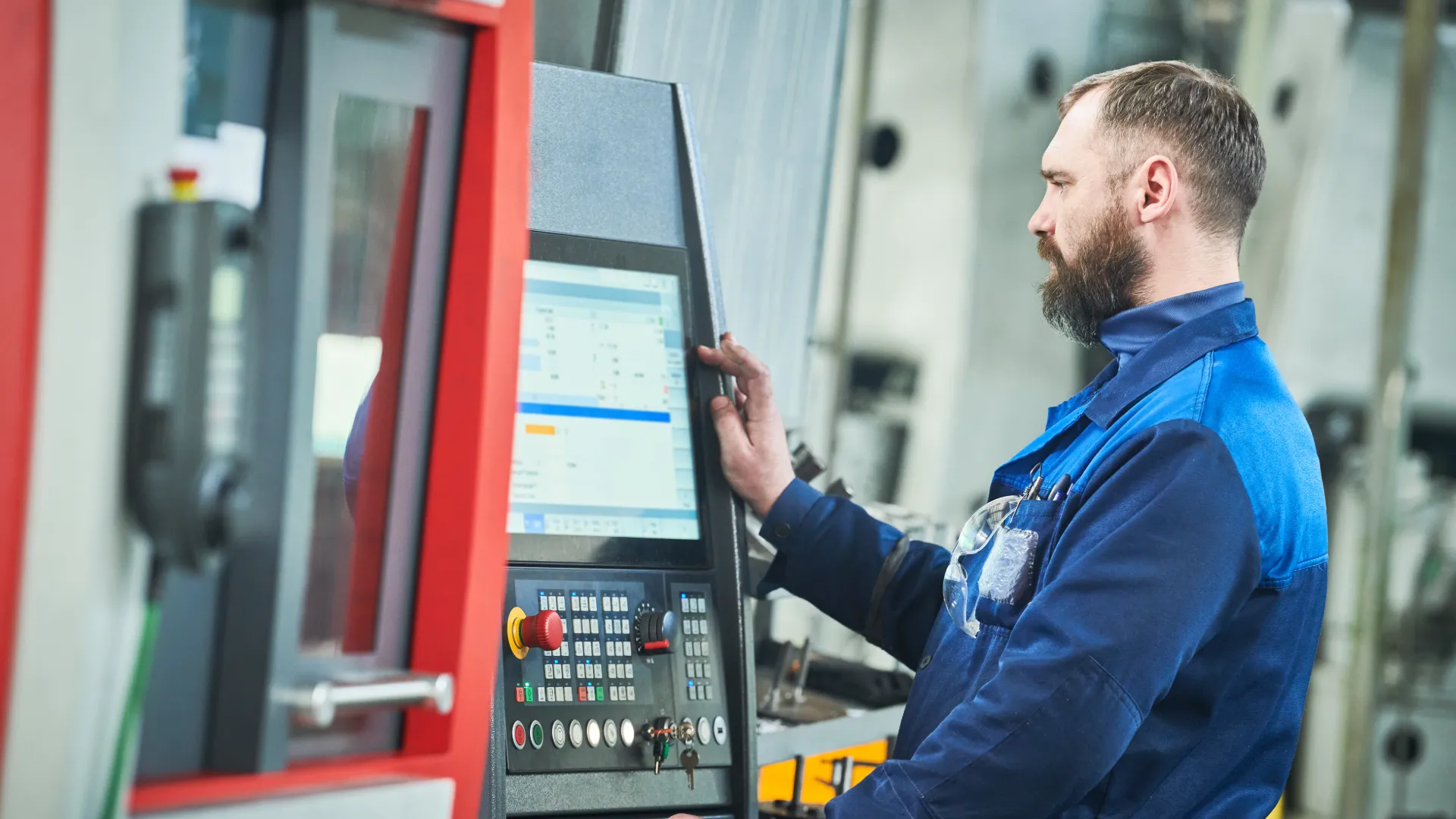
programmers have to repeatedly clean CAD files, prepare parts, assign cutting conditions, create toolpaths, check sequences and generate machine programs manually, even a relatively simple job can consume valuable engineering hours.
The problem becomes more visible in high-mix fabrication environments where every order may contain different geometries, materials, thicknesses and quantities. Adding more machines does not necessarily solve the problem if the programming department cannot prepare jobs at the same pace.
Reducing CNC programming time therefore is not simply about making programmers work faster. It is about removing repetitive decisions, improving data flow and giving programmers the right level of automation while keeping them in control of the final production program.
A programmer may spend only a few minutes on an individual preparation task, but those minutes become significant when hundreds of parts pass through the department every week.
Common sources of lost programming time include:
Cleaning imported CAD geometry
Separating parts from larger assemblies
Checking dimensions and contours
Assigning material and thickness information
Repeating cutting technology settings
Manually creating toolpaths
Adjusting cutting sequences
Rechecking programs after design changes
Preparing similar jobs repeatedly
The critical issue is repetition. A skilled programmer may know exactly what needs to be done, yet still have to perform the same actions job after job.
When a machine is waiting for its next program, the problem may not be machine capacity at all. It may be engineering capacity.
A highly productive cutting machine can quickly become underutilized when programs are still sitting in a programming queue. This makes programming throughput an important production KPI, particularly for job shops handling short lead times and frequent changeovers.

Programming becomes faster when common manufacturing decisions are standardized.
Instead of deciding from scratch for every job, the programming workflow can establish repeatable rules for:
Material and thickness
Cutting technology
Lead-in and lead-out strategies
Pierce conditions
Cutting parameters
Tool selection
Part orientation
Cutting sequence
Machine assignment
This does not mean removing the programmer from the process. It means allowing the software to handle predictable tasks while the programmer focuses on exceptions and production-specific decisions.

A consistent workflow should define what happens from the moment CAD data arrives until the NC program is released.
A practical sequence is:
CAD import → geometry validation → part preparation → technology assignment → nesting → toolpath generation → simulation/checking → NC output
When these stages are disconnected across different applications, information can be re-entered, copied or manually verified multiple times.

Poor CAD data can consume disproportionate amounts of programming time. Open contours, duplicate entities, unnecessary construction geometry and inconsistent part information can all create additional preparation work.
A better process identifies these issues early rather than discovering them during final programming.

High-volume fabrication rarely involves one part at a time. A production order may contain dozens or hundreds of components.
Software automation becomes particularly valuable when multiple parts can be imported, prepared and organized as a group rather than processed individually.
This approach reduces repetitive mouse clicks and helps the programmer spend more time reviewing production requirements instead of performing routine file preparation.

Toolpath generation is one of the areas where programming automation can produce substantial time savings.
For recurring production requirements, software can apply predefined manufacturing logic for operations such as:
Lead-in and lead-out placement
Pierce selection
Cutting conditions
Contour recognition
Cutting order
Toolpath creation
Common programming rules
The objective is not to eliminate engineering judgment. It is to eliminate repetitive manual execution of decisions that have already been standardized.

Good automation should remain editable.
A programmer should be able to review the automatically generated result, identify unusual geometries or production constraints, make adjustments and validate the final program.
This is especially important for fabrication environments where every job is not identical.

A program that reaches the machine with an error creates far more disruption than an error discovered during programming.
Simulation and verification can help identify issues before the NC file reaches production.
Depending on the application, programmers may need to check:
Toolpath direction
Cutting sequence
Pierce locations
Part orientation
Collision risks
Machine travel
Unwanted cutting moves
Incorrect technology settings

Design revisions are another common source of programming rework. If a drawing changes after programming has already started, the programmer may have to repeat several preparation steps.
A connected CAD/CAM workflow helps reduce unnecessary re-entry by keeping part preparation and manufacturing programming closer together.
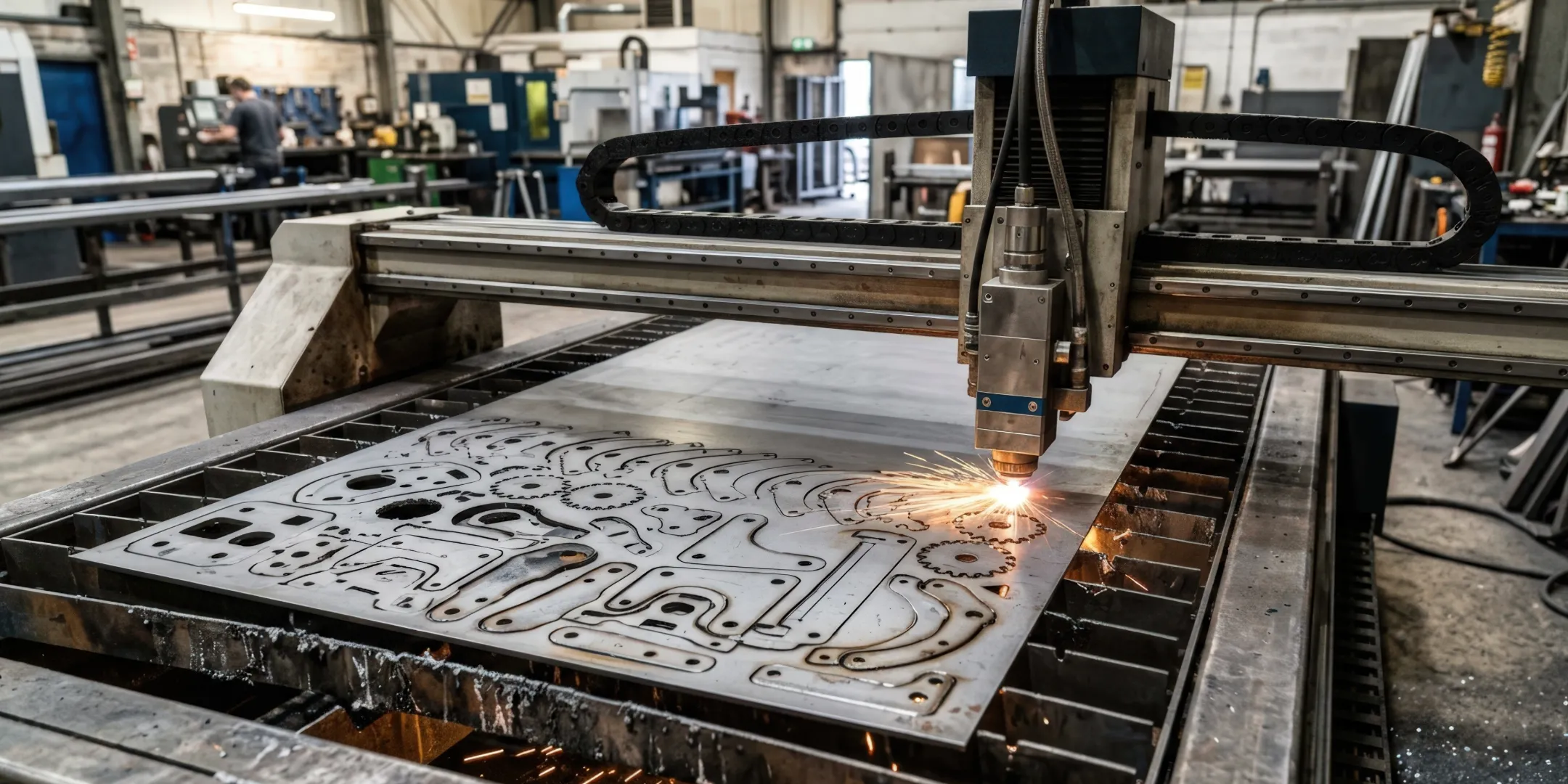
Programming efficiency cannot be evaluated without considering the machine receiving the final NC program.
A CAD/CAM system needs to account for the machine configuration, controller requirements and manufacturing process. Otherwise, programmers can spend considerable time modifying or correcting output after the main programming work is finished.
Moving between separate applications for CAD cleanup, nesting, programming, simulation and NC generation introduces additional steps.
An integrated CAD/CAM environment can bring more of these functions into a common workflow, reducing unnecessary data transfers and helping programmers maintain better continuity from part preparation to machine output.
CADCAMSYS positions AlmaCAM around this connected workflow, covering CAD preparation, nesting, machine programming and multiple CNC cutting technologies.
To determine whether programming improvements are actually working, fabrication businesses should measure the process.
Useful KPIs include:
Average programming time per job
Parts programmed per programmer per shift
Programming queue size
Average time from CAD release to NC release
Number of program revisions
Machine waiting time caused by missing programs
First-time program acceptance rate
The objective is not simply to make programmers produce more programs.
The better question is:
Where is the production workflow waiting for engineering?
A shop might discover that CAD preparation is the bottleneck rather than toolpath generation. Another may find that machine-specific post-processing causes delays. Measuring the complete workflow makes it easier to invest in the part of the process that actually limits throughput.
A more efficient workflow typically combines automation with programmer oversight.
Instead of:
Import → manually edit → manually program → manually recheck → generate NC
the process can move toward:
Import → automated preparation → standardized technology → automated programming → verification → programmer approval → NC output
The programmer remains responsible for the manufacturing decision, while software takes over repetitive execution.
Reducing programming time can create benefits beyond the engineering department.
Faster programming can help a fabrication business:
Release jobs to machines sooner
Reduce machine idle time
Handle more production orders with existing resources
Reduce repetitive engineering work
Improve consistency between programmers
Respond more effectively to urgent jobs
Reduce avoidable programming rework
The biggest gain is often not one dramatic time saving. It is the cumulative effect of removing small delays from every job.

CNC programming is a critical link between engineering and production, but it does not have to become a bottleneck as order volumes and part complexity increase.
The most effective way to reduce CNC programming time is to examine the complete workflow rather than focusing on one programming task. Standardizing manufacturing rules, improving CAD data preparation, automating repetitive toolpath operations, verifying programs before production and using machine-appropriate CAD/CAM technology can significantly reduce avoidable engineering effort.
For sheet metal fabricators, the goal is not simply to create CNC programs faster. It is to create a programming process that is repeatable, scalable and reliable enough to keep production moving.
Your CNC programming workflow should support production—not hold it back.
CADCAM Automation Systems helps manufacturers evaluate and implement CAD/CAM solutions for sheet metal cutting, CNC programming, nesting and production workflows.
Email: sales@cadcamsys.com
Book a Demo: Book a CAD/CAM Demo
Bring your real parts, machines and programming challenges—we'll show you what can be improved.
CADCAM Automation Systems
Smarter CAM. Faster Manufacturing.
 CADCAM Automation Systems
Advanced CAD/CAM Software for Sheet Metal Manufacturing